The Corner Table Is the New Temple Courtyard: Inside Southeast Asian American Coffee Shops
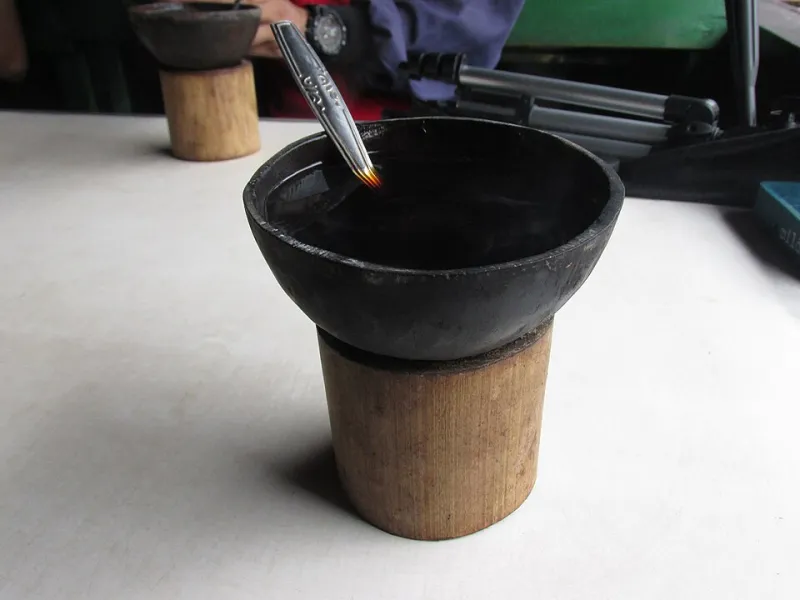
Photo: Onyaso, CC BY-SA 4.0, via Wikimedia Commons
The Line Was Never About the Coffee
On a Sunday morning in 2026, a coffee shop in a strip mall outside St. Paul has two kinds of lines. One is for drinks. The other is for the corner table, where an older man in a polo shirt is holding court with a thermos of hot water and a stack of community flyers. The line for drinks moves faster. The line for the table is more like a rotation, a slow choreography of aunties, cousins, and college students who know that the seat is not really a seat. It is a shift.
Southeast Asian American coffee shops are having a moment, but the moment is not only about caffeine. Across the US, from Long Beach to Lowell, from Fresno to Philadelphia, these shops are becoming the new third place for communities that need a room which is not home, not work, and not the temple. They serve Lao coffee, Cambodian iced coffee, Thai-style drinks, and regional blends. They also serve as living rooms, after-church gathering spots, and small-business incubators for a generation that wants both a perfect pour-over and a place to speak the language.
What Is Actually in the Cup
The menu is where the story starts, but not where it ends. Lao coffee often means strong, dark, and unapologetically bittersweet, sometimes served with condensed milk and sometimes black enough to wake up a whole household. Cambodian iced coffee tends to lean sweet and creamy, a drink that makes sense in hot weather and long conversations. Thai-style drinks bring their own vocabulary of tea, sweetness, and color. Regional blends and family roasts are showing up too, with beans sourced from Southeast Asia or roasted locally by diaspora businesses.
The best shops do not treat these drinks as novelty items. They explain them. They name the region. They tell you whether the sweetness is traditional or adjusted for the neighborhood. They do not call everything 'Asian-inspired' and hope the customer does not ask follow-up questions. That small act of specificity matters. It turns a menu into a map.
No Lanterns Required
The design language is changing too. For years, Southeast Asian food and drink businesses were pushed toward a familiar set of signals: lanterns, bamboo, exposed brick, a cursive font, maybe a wall of fake greenery. Some of that can be lovely. But a new wave of coffee shops is skipping the generic aesthetic and going for something more personal: family photos, handwritten menus, local art, mismatched chairs, a shelf of community zines, a corner for kids.
That shift is not just about taste. It is about ownership. A shop that looks like the neighborhood it serves is making a claim on the neighborhood. It is saying that Southeast Asian American culture is not a theme to be borrowed for a season. It is a daily practice, with receipts, regulars, and a preferred order.
The Living Room With a POS System
The community function of these shops is easy to miss if you only look at the espresso machine. But spend an hour in one and the pattern appears. After church, a group of elders arrives and rearranges two tables. A college student opens a laptop and then closes it because an auntie has started asking about her major. A young couple practices Khmer or Lao with a grandparent over iced coffee. Someone leaves a stack of flyers for a temple fundraiser. Someone else asks the owner if they can put a small pop-up shelf near the register.
These are not random interactions. They are the infrastructure of a diaspora. The coffee shop becomes a place where information moves: who is hiring, who is selling, who is sick, who is getting married, which community event needs volunteers. It is a living room with a point-of-sale system, and that combination is more powerful than it sounds.
A Small-Business Incubator With Oat Milk
The economic role is just as important. Coffee shops have lower barriers than full restaurants, which makes them a practical first step for entrepreneurs who want to test a concept, build a customer base, and learn the rhythm of a US commercial lease. They can host pop-ups for bakers, clothing sellers, artists, and musicians. They can sell retail bags of coffee, sauces, and snacks. They can become a landing pad for a cousin's catering idea or a friend's dessert business.
That incubator function is especially valuable for Southeast Asian American women and young entrepreneurs who may not have access to traditional business capital. A coffee shop does not solve structural problems, but it can create a room where those problems are discussed, not hidden. It can also model a different kind of success: not scale at any cost, but a business that fits a community's needs and pays its workers.
Field Notes for the First Visit
If you are visiting one of these shops for the first time, here is a short field guide. Ask what the house coffee is and how it is usually served. Do not assume the sweetest drink is the most authentic one. If the shop is busy after a religious service, do not treat the corner table as your personal coworking station. Read the room. Buy something. Say thank you. If there is a community board, actually read it. You might find a language class, a dance practice, or a cousin's pop-up.
And if you hear a language you do not speak, let it be part of the atmosphere. The point of a third place is not that everyone is the same. It is that everyone has a reason to be there.
The Third Place Test
The test of a Southeast Asian American coffee shop is not whether it looks good on social media. It is whether it holds up on a Tuesday afternoon, when the brunch crowd is gone and the regulars are still there. Does it make room for the elder who wants hot water? Does it let the students study without treating them like squatters? Does it pay attention to the neighborhood beyond the hashtag?
If the answer is yes, then the coffee is only part of the story. The shop is doing what a temple courtyard or a family living room has always done: it is giving people a place to be known. That is not a trend. That is a civic function, served in a cup.