Making Hits From the Midwest: How Southeast Asian American Bedroom Producers Are Breaking Through Without the Big City
There's a running joke in music circles that if you want to make it, you pack up everything, move to LA or New York, and grind until someone notices you. For decades, that was basically the script. The studios were there. The industry contacts were there. The whole ecosystem that turns a talented kid into a working artist — it was geographically locked.
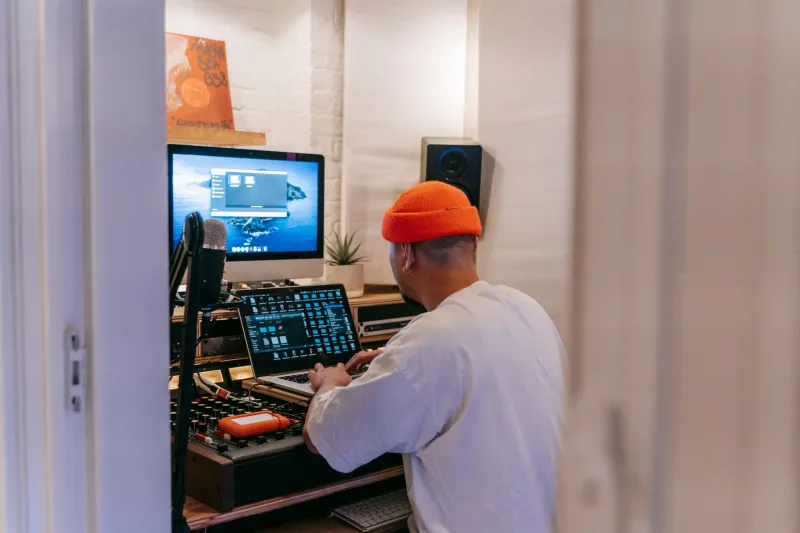
But walk into any house in Fresno, any apartment in Columbus, any suburban split-level in the Minneapolis-Saint Paul metro, and you might find a Southeast Asian American producer hunched over a laptop at 2 a.m., finishing a track that'll rack up a hundred thousand streams before the weekend is over. No label. No industry middleman. No zip code that screams "music hub."
The remix doesn't stop just because you're not in the right city. It just sounds a little different.
The Bedroom Is the New Studio
When audio production software became genuinely affordable and laptop processing power caught up to professional-grade demands, something quietly shifted in who got to make music at a high level. You no longer needed to book expensive studio time to get a clean mix. FL Studio, Ableton, Logic Pro — these tools put professional-sounding production within reach of anyone willing to learn, and Southeast Asian American producers took that opening seriously.
In communities where resources were often stretched thin and moving across the country for a music career felt like a fantasy, the bedroom studio became a lifeline. It was practical. It was accessible. And for a lot of these producers, it was where culture and creativity could coexist without compromise.
There's something specific that happens when you're producing music in a home where your parents might be watching Thai soap operas in the next room, or where the smell of lemongrass and fish sauce drifts under the door. The sounds you grew up with — the melodic structures of Lao folk music, the rhythmic complexity of Filipino kulintang, the pentatonic scales embedded in Vietnamese traditional songs — they don't disappear just because you're working in a digital audio workstation. They find their way in. Sometimes intentionally, sometimes not.
Community as Infrastructure
One of the things that makes this movement different from the classic lone-genius producer narrative is how collaborative it actually is. Southeast Asian American music communities — especially in cities like Sacramento, Houston, and the Twin Cities — have developed tight informal networks where producers share samples, swap feedback, and collab across state lines without ever meeting in person.
Discord servers, private Facebook groups, and Instagram DMs have replaced the industry networking event. A Hmong producer in Minnesota might be trading stems with a Cambodian beatmaker in Long Beach. A Vietnamese American sound engineer in the suburbs of Atlanta might be mastering tracks for an artist based in Portland. The infrastructure is distributed, community-built, and remarkably effective.
This is also where cultural mentorship gets passed down in ways that feel organic rather than institutional. Older producers who came up in the early SoundCloud era share what they know. Younger artists bring in newer techniques. The knowledge flows both directions, and nobody's asking for a cut of your publishing rights to have the conversation.
Why "Small City" Doesn't Mean Small Audience
Here's the thing about streaming: it doesn't care where you live. A track uploaded from a suburb of Saint Paul hits the same playlist algorithms as one recorded in a Hollywood studio. The gatekeepers that once made geography so decisive in a music career have largely stepped aside, replaced by data, engagement metrics, and the unpredictable momentum of a song finding its audience organically.
Southeast Asian American producers have been particularly savvy about this. Many have built fanbases that are genuinely international — connecting with listeners in Southeast Asia, in diaspora communities across Europe and Australia, and within the broader Asian American audience in the US — all without the backing of a major label or a publicist working their contacts.
There's also a growing recognition that being from a smaller city or a tight-knit immigrant community isn't a liability. It's actually a story. Audiences respond to authenticity, and there's something undeniably authentic about a producer who grew up navigating two cultures in a place where that navigation wasn't always easy. That tension, that in-between-ness, shows up in the music. It makes it interesting.
The Sound of Where You're From
What does Southeast Asian American bedroom production actually sound like? That's the wrong question, honestly, because it sounds like a hundred different things. It sounds like lo-fi hip-hop with a phin guitar sample buried in the mix. It sounds like hyperpop with Tagalog hooks. It sounds like R&B that slides between English and Vietnamese mid-verse without asking permission. It sounds like electronic music that lifts a traditional rhythm cycle and runs it through a synthesizer until it becomes something new.
The range is the point. These producers aren't working toward a single unified Southeast Asian American sound — they're each working toward their own thing, and culture is one ingredient among many. Some lean into the heritage explicitly. Others let it sit quietly underneath everything else. Both approaches are valid. Both are making music that matters.
What they share is less about sonic signature and more about orientation. There's a comfort with hybridity, a willingness to pull from multiple traditions without feeling obligated to explain or justify it. That's a particular kind of creative freedom, and it comes from growing up between worlds.
What Comes Next
The conversation about Southeast Asian American music is getting louder, and a lot of that noise is coming from exactly the places the industry used to overlook. Smaller cities. Suburbs. Diaspora communities that built their own scenes because the mainstream wasn't coming to find them.
There's still real work to be done. Distribution deals, sync licensing, getting songs placed in TV and film — these are areas where independent producers still face structural disadvantages, and where having industry connections can make a significant difference. The playing field isn't level yet.
But the gap is closing. And the producers closing it aren't waiting for an invitation to move somewhere else first. They're making the music where they are, building the audience where they are, and rewriting what a music career is allowed to look like in the process.
You don't need the right zip code. You need the right headphones, a decent interface, and about ten thousand hours of stubbornness. The Southeast Asian American producers out here already know that. They've been proving it, one track at a time, from cities and suburbs that never made it onto anyone's music industry map.
Until now.