No Studio, No Problem: Southeast Asian American Filmmakers Are Telling Their Own Stories and Winning
There's a joke that circulates in certain film school circles: you can spend four years studying cinema, graduate with a short film about your immigrant grandmother, and still watch a studio executive squint at your logline and say, "Who's the audience for this?"
For Southeast Asian American filmmakers, that squint has become familiar. But instead of spending another decade knocking on the same doors, a growing number of directors, writers, and producers are just… building new ones.
The Gatekeeping Was Always the Point
Hollywood's relationship with Southeast Asian stories has historically been one of selective borrowing. Vietnam as backdrop, not subject. Thai temples as set dressing. Filipino characters as comic relief, if they show up at all. The stories that got greenlit were usually about the region but rarely from it — filtered through a gaze that prioritized marketability over authenticity.
What got left on the cutting room floor? Pretty much everything that actually mattered. The grief of a Hmong family navigating refugee resettlement in Minnesota. The complicated pride of a second-gen Cambodian American woman who can't quite read Khmer but still feels it in her chest at New Year. The dark humor of Vietnamese American siblings arguing over who has to call the insurance company because their parents' English "isn't good enough" — even though it absolutely is.
These aren't niche stories. They're American stories. The industry just never treated them that way.
Budget Limits as Creative Fuel
Here's the thing about not having a $20 million budget: it forces you to get inventive in ways that big productions rarely do.
Filmmakers working in this space talk about constraint as a kind of creative pressure cooker. When you can't afford elaborate sets, you shoot in your aunt's living room — and suddenly the movie feels lived in in a way no production designer could fake. When you can't pay for a name actor, you cast from your community theater, your temple, your mom's friend who's never been on camera but has more presence than anyone you've ever met.
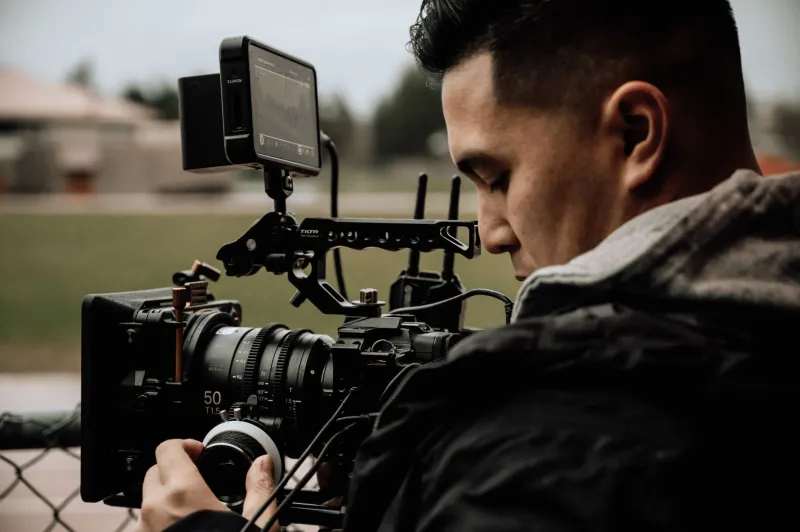
Some of the most talked-about short films coming out of the Southeast Asian American indie scene were shot on shoestring budgets with crews who worked weekends because they believed in the project. The scrappiness isn't a limitation. It's a signature.
And streaming platforms — both the major ones and the smaller, more culturally specific ones — have become real distribution pathways in a way that simply didn't exist fifteen years ago. A film that would've spent eternity on a festival circuit and then disappeared can now find its audience on demand, across time zones, in the living rooms of diaspora families who've been waiting to see themselves reflected back.
What Stories Are Actually Getting Made
The range is wider than most people expect.
There are documentaries tracing the oral histories of Lao and Cambodian survivors, giving screen time to stories that rarely make it into American history textbooks. There are coming-of-age narratives set in Vietnamese American nail salon communities — not played for stereotype, but rendered with the kind of specificity that makes you feel like you've been in that salon, smelled the acetone, heard the gossip.
There are genre films, too. Horror. Thriller. Romantic comedy. Southeast Asian American filmmakers aren't limiting themselves to prestige drama just because that's what the industry tends to greenlight when it does take a chance on underrepresented voices. They're making the movies they actually want to watch.
One area that keeps coming up in conversations with people working in this space: the intergenerational story. The push and pull between parents who survived something enormous and children who grew up in the aftermath of that survival. It's a theme that resonates across every Southeast Asian diaspora community in the US, and it's one that Hollywood has consistently fumbled when it's tried to touch it at all.
Festivals as Community, Not Just Résumé
For independent filmmakers, the festival circuit isn't just about awards consideration or industry buzz. It's about finding your people.
Festivals specifically focused on Asian American and Pacific Islander film have become genuine gathering points — places where a filmmaker from Fresno can connect with a producer from Houston, where a debut short gets seen by a distributor who's actually looking for exactly this kind of story. The networking that happens in these spaces is different from what you'd find at Sundance. It's more communal. More invested in the long game.
There's also something powerful about screening your film for an audience that gets it without needing everything explained. When a joke lands because everyone in the room has had that exact experience with their parents, or when a quiet moment of grief hits because the cultural context is shared — that's a specific kind of validation that no critical review can replicate.
The Audience Was Always There
One of the most persistent myths Hollywood tells itself is that Southeast Asian American stories don't have a built-in audience large enough to justify the investment. The math, if you actually run it, doesn't support this.
There are over 5 million people of Southeast Asian descent in the United States. Add in the broader Asian American community that consistently shows up for authentic, well-crafted stories — as the success of various Asian American-led films in recent years has demonstrated — and the "unmarketable" argument starts to look less like market analysis and more like excuse-making.
The filmmakers building this independent ecosystem aren't waiting for the industry to update its math. They're creating their own data points, one streaming release, one sold-out festival screening, one viral clip at a time.
What Comes Next
The conversation is shifting, slowly. More Southeast Asian American filmmakers are getting into writers' rooms, producing credits, and directing opportunities at the studio level. But the independent track isn't going away — and most people working in this space don't want it to.
The freedom to tell a story without a development executive asking you to make the protagonist more "universally relatable" (translation: less specifically Southeast Asian) is something you don't give up easily once you've had it.
What's emerging is a dual ecosystem: filmmakers who move between independent projects and larger productions, using the credibility from one to fund the creative risk of the other. It's a sustainable model, and it's producing work that's genuinely exciting.
The studio gatekeepers didn't leave room for these stories. So the filmmakers made their own room. And honestly? The movies are better for it.