Something Old, Something 808: Inside the World of Southeast Asian American Wedding DJs
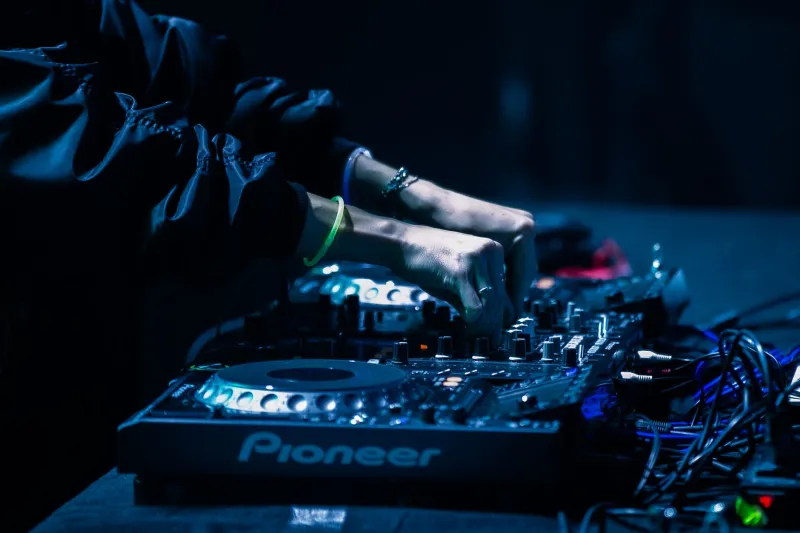
There's a moment every Southeast Asian American wedding DJ knows by heart. The traditional ceremony has wrapped. The elders are seated with their tea. The younger cousins are already eyeing the dance floor like it owes them something. And somewhere in between a Thai mor lam folk melody and a Travis Scott drop, the DJ has about thirty seconds to make everyone feel seen.
No pressure.
"People think it's just vibes," says Kosal Prak, a Khmer American DJ based in Long Beach, California who has been working weddings across the LA basin for nearly a decade. "But it's honestly the most technical set I ever play. You're not just reading the room — you're reading like four different rooms happening at the same time."
The Set That Has to Do Everything
For Southeast Asian American wedding DJs, the job description is unlike anything in the club or festival circuit. A typical reception might require fluency in Cambodian classical music, Vietnamese bolero, Lao pop, Thai country, and then — without losing the thread — pivot into R&B slow jams, hip-hop bangers, and whatever hyperpop track the bride's college friends requested on the RSVP form.
Mia Thongsavanh, a Lao American DJ working the Twin Cities market in Minnesota, describes her preparation process as part curation, part cultural archaeology. "Before every wedding I sit down with the couple and I ask them: what did your parents listen to at their own wedding? What did your grandparents play at Boun celebrations? And then I ask the couple what they were listening to in high school, what's on their Spotify right now. You have to build a map."
That map, she says, is rarely a straight line. It doubles back, branches off, occasionally contradicts itself. A Vietnamese American groom raised in Houston might want Sơn Tùng M-TP seguing into a Kendrick Lamar deep cut. His parents might expect a few bars of nhạc vàng before anyone touches the buffet. His new wife's Filipino American family just wants to hear Bruno Mars. The DJ's job is to make all of that feel intentional rather than schizophrenic.
Remixing the Sacred Without Losing It
One of the more delicate creative challenges these DJs navigate is how to incorporate traditional ceremonial music into a modern set without it feeling like a museum exhibit — or worse, a joke.
Kosal has been experimenting with what he calls "ghost layering," a technique where he runs a low, processed sample of traditional Cambodian pinpeat ensemble sounds underneath a contemporary trap beat. The 808s carry the energy while the older melodic elements float just beneath the surface, felt more than consciously heard. "The elders don't always know why they feel comfortable," he says with a grin. "But they feel it. And the young people just think the drop is hitting extra hard."
It's a subtle art, and it requires genuine knowledge of the source material. Kosal grew up watching his grandmother play the roneat ek, a bamboo xylophone central to Khmer classical music, and he credits that upbringing with giving him an ear for where traditional scales and rhythmic patterns can lock in with Western production. "If you don't actually understand the music, you can't remix it respectfully. You'll just make something that sounds wrong to everyone."
Mia agrees, and she's taken a slightly different approach: full transparency with the crowd. At some receptions, she'll grab the mic and briefly explain what a traditional Lao piece is and why it's being played before she transitions into something contemporary. "People appreciate context. Even the young ones. Especially the young ones, actually — they want to understand where they come from. They just also want to dance."
Negotiating the Generation Gap in Real Time
The diplomatic dimension of this work is something these DJs don't take lightly. Reading a multigenerational Southeast Asian American crowd means understanding unspoken hierarchies, cultural expectations around formality, and the very specific social dynamics of a family celebration where aunties and TikTok-fluent teenagers are sharing the same buffet line.
DJ Kevin Nguyen, a Vietnamese American selector based in the DC metro area who goes by the name Ke-V on the circuit, has developed what he calls a "temperature check" system throughout the night. "Every forty-five minutes or so, I look at who's on the floor, who's sitting, who's talking to who. If the parents are starting to drift toward the exit, I know it's time to pull something back, play something familiar. If the young people are fading, I know I need to build energy back up."
He's also learned to pre-negotiate with couples about hard moments — the first dance, the parent dances, the point in the night when the older generation typically departs and the real party begins. "That handoff is everything. If you fumble it, you lose the whole room. But if you do it right, it feels like a natural exhale. The parents leave feeling honored, and the young people feel like the night just leveled up."
The Technical Stack Behind the Cultural Magic
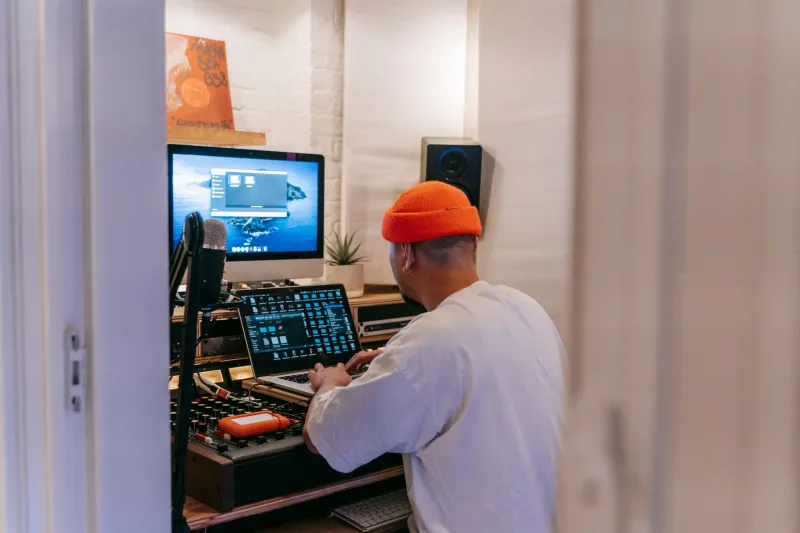
Beyond the interpersonal skills, these DJs are also serious about their gear and technique. Kosal runs a hybrid setup that includes traditional DJ software alongside a sampler loaded with field recordings — actual recordings he's made of instruments at community celebrations, temple events, and family gatherings. "I wanted samples that actually sound like our community, not some stock library's idea of what 'Asian music' sounds like."
Mia has been incorporating live looping into some of her higher-budget bookings, occasionally collaborating with a Lao khaen player — the khaen being a traditional bamboo mouth organ — who performs a short live segment that she then loops and processes in real time as the transition into a dance set. "When that khaen comes in over a four-on-the-floor kick, people genuinely lose their minds. It's something they've never heard before, but it also feels completely familiar."
A New Sound for a New Chapter
What these DJs are building, set by set and reception by reception, is more than just a wedding playlist. It's a living document of what Southeast Asian American identity actually sounds like in 2025 — complicated, layered, deeply rooted, and completely unafraid of a good bass drop.
For couples navigating the enormous emotional complexity of a wedding that has to honor immigrant parents, celebrate personal milestones, and hold space for a community that has survived a lot to be in that room together, having a DJ who genuinely understands the assignment is not a small thing.
"Music is how we remember," Kosal says, breaking down his setup after a long Saturday night in Anaheim. "And at a wedding, you're creating a memory that's going to last the whole family's lifetime. You better get it right."
He pauses, then laughs. "And you better make it slap."