Scrolling Through the Motherland: How Southeast Asian Gen Z Is Keeping Culture Alive One Post at a Time
Grow up in a Vietnamese, Cambodian, Lao, or Thai household in the U.S. and you know the drill. Your parents blast old-country music from a Bluetooth speaker in the kitchen. Your lola or yiay insists you greet every elder with a proper bow or wai. And somewhere between AP Chemistry homework and a Spotify playlist, you're supposed to figure out exactly who you are.
For older generations of Southeast Asian Americans, cultural identity was maintained through physical community — temples, community centers, weekend language schools, and potlucks that stretched until midnight. But for Gen Z, the kids who were born into broadband and came of age on Instagram Reels, the blueprint looks radically different. And honestly? It might be working better than anyone expected.
Swiping Right on Heritage
Meet Kanya Srisuk, 22, a Thai American college student in Houston who runs a TikTok account dedicated to explaining Buddhist merit-making rituals to her 47,000 followers — most of whom are other Southeast Asian Americans who grew up not quite knowing why their families did what they did.
"My parents would take me to the temple every Songkran, but they never really explained the deeper meaning," she says. "I started researching on my own, making videos, and suddenly I'm getting DMs from Lao kids, Khmer kids, Vietnamese kids saying 'this is my family too.' We found each other online."
That sense of cross-cultural recognition is something researchers are starting to pay close attention to. Dr. Michelle Tran, a clinical psychologist at UCLA who specializes in immigrant family dynamics, says social media has created a kind of "pan-Southeast Asian consciousness" among diaspora youth that simply didn't exist a generation ago.
"These young people are not just preserving their specific ethnic identity — they're building solidarity across the entire region," Dr. Tran explains. "A Cambodian American teenager in Long Beach might feel a deeper connection to a Hmong American creator in Minneapolis than to their own cousins back in Phnom Penh. That's genuinely new."
The Hybrid Tradition Factory
One of the most fascinating things happening right now is how Gen Z isn't just consuming cultural content — they're actively remixing it. Think of it like a cultural production lab running 24/7 across every time zone where Southeast Asian Americans live.
Take the rise of "digital altar aesthetics" on Pinterest and Instagram. Young Vietnamese Americans are sharing photos of their family altars styled with incense, fresh fruit, and LED fairy lights alongside handwritten notes in both English and Vietnamese. It's simultaneously deeply traditional and unmistakably Gen Z. The ancestors would recognize the offering. The algorithm loves the lighting.
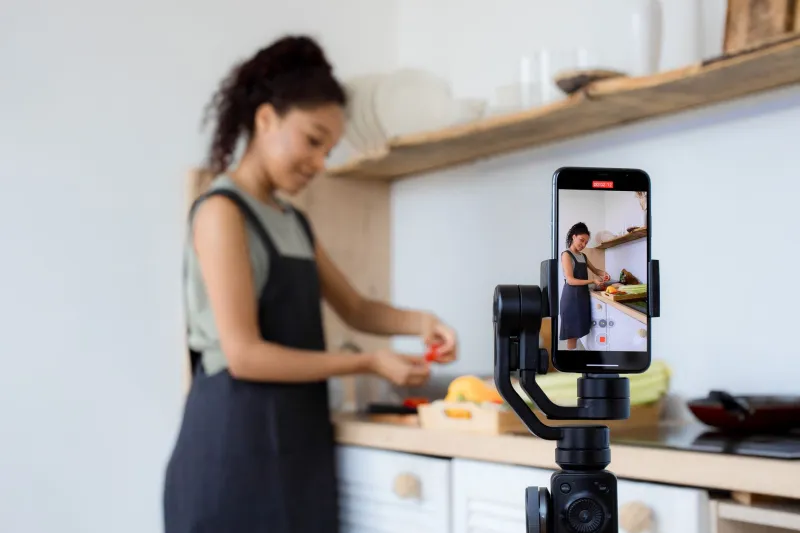
Or consider the Lao American food creators who are filming their grandmothers making tam mak hoong (green papaya salad) while narrating the process in English for their American-born followers — turning a family recipe into a cultural education moment that racks up hundreds of thousands of views.
"We're not watering it down," insists Dara Phommasack, 24, a Lao American content creator based in the Twin Cities. "We're translating it. There's a difference. My grandmother's recipe is still exactly the same. I'm just making sure it doesn't disappear when she's gone."
Discord Temples and Group Chat Ceremonies
Beyond the public-facing world of TikTok and Instagram, there's a quieter but equally powerful cultural infrastructure being built in private spaces. Discord servers, Facebook groups, and WhatsApp threads have become the new community centers for Southeast Asian diaspora youth — places where people ask questions they're too embarrassed to ask their parents, share resources in their heritage languages, and organize around cultural events.
One Discord server called "SEA Diaspora Collective" has over 8,000 members spanning Thai, Vietnamese, Khmer, Hmong, Burmese, and Filipino American young adults. Channels range from "language learning" and "traditional cooking help" to "mental health support" and "navigating family pressure." It's a remarkably human space tucked inside a gaming platform.
"The temple in my city is great, but it's mostly older people and it's only open on weekends," says one 19-year-old Cambodian American member who asked to go by her online name, Apsara_Lotus. "On Discord, I can ask about Khmer New Year traditions at 2 a.m. and someone will answer. That's the community I needed."
The Tension Nobody Talks About Enough
It would be easy to frame all of this as a straightforward success story, but Dr. Tran is careful to note the real psychological complexity underneath.
"There's a performance pressure that comes with public cultural identity online," she says. "If you post about your culture and someone in the comments says 'that's not how we do it in Cambodia,' that can feel like a rejection of your entire identity. These kids are navigating authenticity in a very public, very unforgiving space."
Kanya echoes this. She's had videos go viral for the wrong reasons — moments where her Thai American perspective clashed with viewers from Thailand who felt she was getting something wrong. "It's hard. I'm not Thai Thai, I'm Thai American. Those are different things, and not everyone wants to accept that."
This tension — between the homeland version of a culture and the diaspora version — is one of the defining experiences of Southeast Asian Gen Z identity in America. They're not trying to replicate their parents' culture perfectly. They're building something new from the pieces they were handed, adding American context, and sharing it with the world.
What Comes Next
The community leaders who work with Southeast Asian youth organizations say they're watching this digital cultural renaissance with genuine excitement — and some strategic thinking.
"We used to spend so much energy trying to get young people to come to in-person events," says Marcus Vang, program director at a Hmong American community organization in St. Paul. "Now we're thinking about how to bring our resources to where they already are. Meet them in the feed, not just the fellowship hall."
For Dara, the path forward is simple: keep cooking, keep filming, keep narrating. "My grandmother is 78. Every video I make with her is a video I'll have forever. That's not just content — that's preservation. That's love."
In a world where culture can go viral or vanish overnight, Southeast Asian Gen Z has figured out something quietly profound: the most powerful way to hold onto where you come from is to share it — loudly, creatively, and without apology.