New Money, Old Heart: How Southeast Asian Americans Are Reinventing the Art of Giving Back
There's a Venmo request circulating in a Khmer American group chat in Long Beach right now. The note reads: "For Auntie Sophy's hospital bills 🙏." Within 48 hours, it hits its goal. No gala. No grant application. No 501(c)(3) paperwork. Just community doing what community has always done — except this time, the collection bowl is digital.
This is what philanthropy looks like when Southeast Asian Americans get their hands on it. And honestly? It's always looked something like this. The form just keeps changing.
The Original Safety Net
Long before GoFundMe existed, Southeast Asian communities were running their own mutual aid infrastructure. Vietnamese families gathered for hụi — rotating credit circles where members pooled money and took turns drawing from the pot. Filipino families knew it as paluwagan. Cambodian, Lao, and Thai communities had their own versions, all built on the same bedrock: you show up for people, and people show up for you.
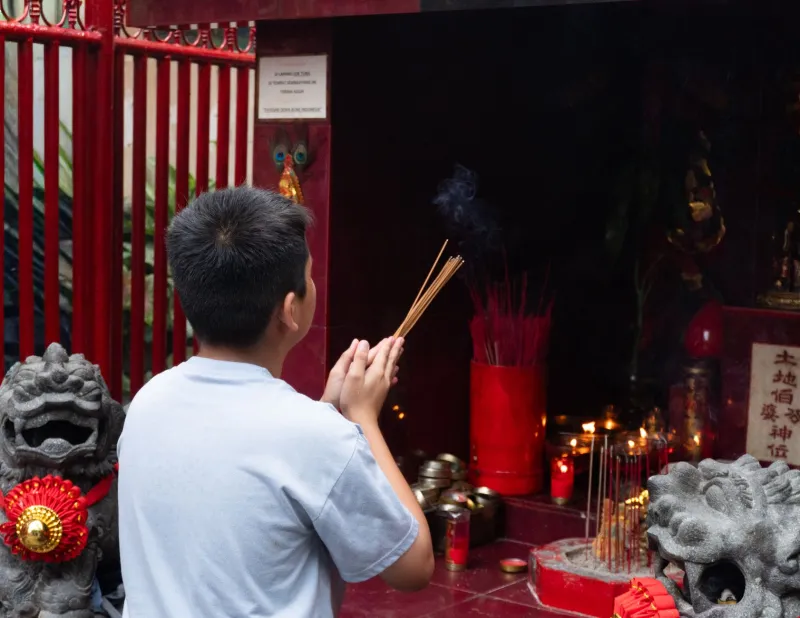
Temple giving was another cornerstone. Whether it was a Buddhist pagoda in Orange County or a Lao temple in Minneapolis, religious spaces doubled as community banks — places where donations funded not just ceremonies but emergency housing, immigration support, and food for newly arrived families.
"My parents gave to the temple every single week, even when money was tight," says Mia Thongvong, a 27-year-old Lao American community organizer based in the Twin Cities. "It wasn't charity in the Western sense. It was more like — we're all in this together and the temple is the center of that."
That ethos never disappeared. It just got complicated when the next generation grew up, moved into corporate jobs, and started asking harder questions about where their money was actually going.
The Accountability Generation
Gen Z and younger Millennials in Southeast Asian American communities are fluent in the language of institutional philanthropy — impact reports, fiscal transparency, DEI metrics. They've also watched established nonprofits fumble when it comes to truly centering diaspora voices. The result is a cohort of young people who want to give generously and strategically, and who aren't always convinced that traditional institutions are the best vehicle.
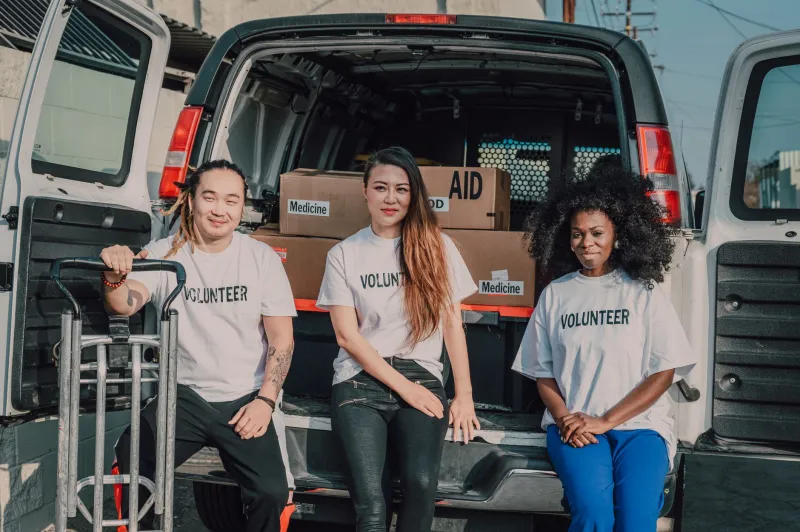
"I got really disillusioned after volunteering with a few larger orgs where we were basically props for their donor events," says Kevin Nguyen, a 24-year-old Vietnamese American activist and co-founder of a Houston-based community fund. "So we just started our own thing. A group of friends, a shared bank account, a Discord server, and a commitment to actually getting money to people who need it fast."
Kevin's group, which operates informally but with clear community accountability, has distributed over $40,000 in the past two years — covering everything from first-month rent for newly arrived refugees to emergency dental work for elderly community members who fell through the cracks of local assistance programs.
The speed matters. Traditional grant cycles can take six to twelve months. A family in crisis doesn't have that kind of time.
When the Blockchain Meets the Blessing Bowl
Here's where it gets genuinely interesting. A small but growing number of Southeast Asian American organizers are experimenting with crypto and blockchain tools to build giving networks that are transparent, borderless, and harder to gatekeep.
The appeal isn't just tech novelty. For communities with transnational ties — families split between the US, the Philippines, Cambodia, or Vietnam — traditional remittance systems are expensive and slow. Crypto transfers can move money internationally with lower fees and fewer middlemen. Some community groups are exploring DAOs (Decentralized Autonomous Organizations) as a framework for collective decision-making about how pooled funds get distributed.
"The DAO model actually maps onto how our communities already think about collective ownership," explains Jasmine Reyes, a Filipino American tech worker and community fund organizer in the Bay Area. "Everyone has a say. Nobody gets to be the gatekeeper. The rules are written in the code and everyone can see them."
She's quick to add the caveats. Crypto is volatile. The learning curve is steep. And not every auntie in the community is trying to set up a MetaMask wallet. The goal isn't to replace accessible giving methods — it's to add tools that work for specific use cases, especially cross-border support.
Tet Fundraisers, But Make It a Movement
On the more immediately accessible end of the spectrum, Southeast Asian American organizers are digitizing and scaling the cultural fundraising events that communities have relied on for decades.
Tet festivals, Hmong New Year celebrations, Cambodian cultural nights — these events were always fundraisers in spirit, even when they were framed as cultural showcases. Now, younger organizers are being more intentional about it. They're building out donation infrastructure, creating recurring giving campaigns tied to cultural moments, and using social media to reach the broader diaspora beyond just local attendees.
A Hmong American collective in Sacramento turned their annual New Year celebration into a hybrid event last year — in-person festivities with a live-streamed component and a linked fundraising page that brought in donations from Hmong communities in Minnesota, Wisconsin, and even France. Total raised: nearly $80,000, directed toward a youth scholarship fund and emergency housing support.
"Our elders used to say that when you give, you're not just helping one person — you're strengthening the whole web," says Pa Xiong, one of the collective's lead organizers. "We're just finding new ways to weave that web wider."
Honoring the Why While Upgrading the How
What's striking about all of these efforts is that none of the organizers interviewed described themselves as departing from tradition. Every single one circled back to the same thing: the values were never the problem. The systems just needed updating.
The hụi wasn't wrong — it just needed encryption and group chats. The temple donation wasn't inefficient — it just needed a digital payment option and a public ledger. The community potluck fundraiser wasn't small-time — it just needed a live stream and a Venmo link.
There's something deeply Southeast Asian about this approach, actually. These are cultures that have survived colonialism, war, displacement, and resettlement by being adaptable without losing the core. The form shifts. The heart stays.
For Kevin back in Houston, that means running his community fund out of a shared spreadsheet that every contributor can access. For Jasmine in the Bay Area, it means slowly introducing crypto tools to community members who are curious but cautious. For Mia in Minneapolis, it means showing up to the temple — and also running the Discord.
"People ask me if digital giving is going to replace the temple," Mia says, laughing. "I'm like, no. The temple is still the temple. But now we can also send $20 to someone in Cambodia in five minutes. Both things are true."
The bowl is bigger now. The blessing is the same.