Neither/Nor and Proud of It: How Southeast Asian Americans Are Rewriting the Rules of What 'Real' Culture Looks Like
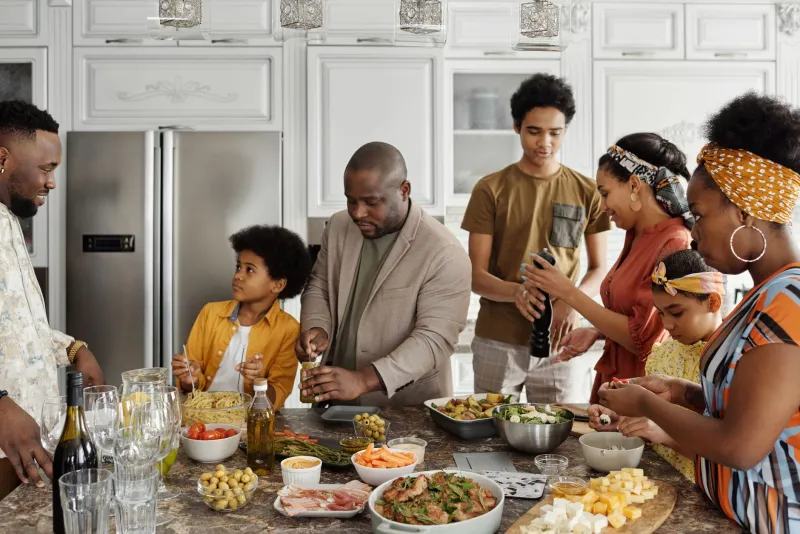
There's a scene that plays out in living rooms across the country, from Little Saigon to the suburbs of Minneapolis, from Houston's Viet-Cajun restaurants to the Cambodian enclaves of Long Beach. A kid comes home with a new idea — a fusion dish, a remixed song, a prayer ritual adapted for an apartment with no incense — and an elder in the room squints, tilts their head, and says some version of the same thing: That's not how we do it.
But here's what's changing. Increasingly, the conversation doesn't end there.
The Word Nobody Can Agree On
Ask ten Southeast Asian Americans what "authentic" means and you'll get ten different answers — and at least three of them will involve a grandmother. That's not a joke. It's actually the crux of the whole debate.
For older generations who immigrated to the US carrying their cultures like packed luggage — careful, deliberate, nothing left behind — authenticity was about preservation. You kept the language clean. You made the food the right way. You showed up to temple, to community events, to New Year celebrations, even when it was inconvenient, because inconvenience was the point. The effort was the proof.
For their kids and grandkids, though, authenticity looks different. It's less about replication and more about resonance. It's asking: Does this feel true to who I actually am? And who they actually are is complicated — shaped by TikTok and grandma's kitchen, by American high school hallways and Zoom calls with cousins overseas, by code-switching so fluently that sometimes they forget which language they started the sentence in.
"I used to feel guilty about not speaking Lao perfectly," says Maly, 27, a second-generation Lao American from the Twin Cities who works in community arts. "And then I realized — my guilt was coming from other people's idea of what I was supposed to be. My Lao is mine. It's mixed up with English and slang and stuff my parents never said. That's still Lao."
Fusion Is Not a Dirty Word
Nothing sparks a cultural debate in Southeast Asian American communities quite like food. And nothing reveals the generational divide quite as clearly.
When Vietnamese American chefs started putting jalapeños in their pho and sriracha aioli on their bánh mì, the internet had opinions. So did a lot of aunties. The argument was familiar: you're watering it down, you're selling out, you're making it palatable for people who don't actually care about where it came from.
But spend time in the kitchens where these chefs actually work, and you hear something more nuanced. Many of them grew up eating both — their mom's traditional recipes and whatever was in the fridge on a Tuesday night in suburban America. Their cooking isn't a betrayal of heritage. It's a record of a lived experience that is genuinely, messily, beautifully in-between.
Khmer American food blogger Sreyna, 31, based in Oakland, has been documenting her cooking for three years. Her most viral post was a Cambodian amok curry made with coconut milk from a can and served over jasmine rice from a bag she bought at Costco. Comments ranged from "this is not authentic" to "this is exactly what my mom made."
"Both of those people are right," she says, laughing. "That's the thing. There's no one Cambodian kitchen. There's just a bunch of us figuring it out."
When the Altar Has a Playlist
Spiritual practice is where the conversation gets the most tender — and the most interesting.
For many Southeast Asian families, religion and culture are not separate categories. Whether it's Theravada Buddhism, Cao Dai, animist traditions, or syncretic practices that blend all of the above, spiritual life is woven into everything: the food offerings, the calendar, the way you talk to your ancestors, the way you grieve.
Adapting these practices for diaspora life in the US — where you might not have a temple nearby, where your apartment doesn't allow incense, where your American-born kids look at the altar with curiosity but not always comprehension — requires constant negotiation.
Some families have started incorporating things their elders never would have imagined. Playlists of traditional music played through a Bluetooth speaker during ceremonies. Virtual altar setups for relatives overseas who can join via FaceTime. Younger family members leading prayers in English when their Khmer or Tagalog or Hmong isn't strong enough to carry the full ritual.
And slowly — not without friction, but genuinely — some elders are coming around.
"My grandmother used to say that the ancestors wouldn't understand English," says Dao, 24, a Thai American from Atlanta. "And then one day she watched me do a small offering and say a prayer in English, and she was quiet for a long time. Then she said, 'They know your heart.' That was it. That was everything."
Elders Are Evolving Too
It would be too easy to frame this as a young-versus-old story. The reality is messier and, frankly, more hopeful.
Many community leaders who came to the US as refugees or immigrants have spent decades watching their children grow into people they didn't entirely plan for — and choosing, over time, to see that as a gift rather than a loss. That shift doesn't happen overnight, and it doesn't happen without grief. But it happens.
Phong, 61, a Vietnamese American community organizer in San Jose who has been running cultural programs for over twenty years, says his perspective has changed significantly in the last decade. "When I started, I thought my job was to protect the culture — keep it exactly as it was. Now I think my job is to help it survive. And surviving means changing."
He points to a youth cultural festival his organization runs every year, which has evolved from strictly traditional performances to a lineup that now includes Vietnamese American hip-hop artists, a Viet-Cajun cooking demo, and a panel on mental health in the community. Attendance has tripled.
"The young people showed up when we made room for them," he says. "That's the lesson."
So What Does 'Real' Actually Mean?
Maybe the most honest answer is that "authentic" was never a fixed destination. Every culture that has ever survived a migration, a war, a generation gap, or a Costco trip has had to reinvent itself. Southeast Asian cultures are no different — and Southeast Asian Americans are not the first to feel the tension between preservation and adaptation.
What is different, maybe, is that this generation is doing it out loud. They're posting about it, making music about it, cooking about it, building businesses around it. They're having the argument in public, which means the argument is actually happening — instead of getting buried under the pressure to seem unified.
And that, more than anything, might be the most culturally Southeast Asian thing of all: the community gathering, the debate, the loud disagreement, and then — eventually — the shared meal.
Authentic enough.