Sacred Geometry in the Skyline: Southeast Asian American Designers Are Putting Their Culture on the Map — Literally
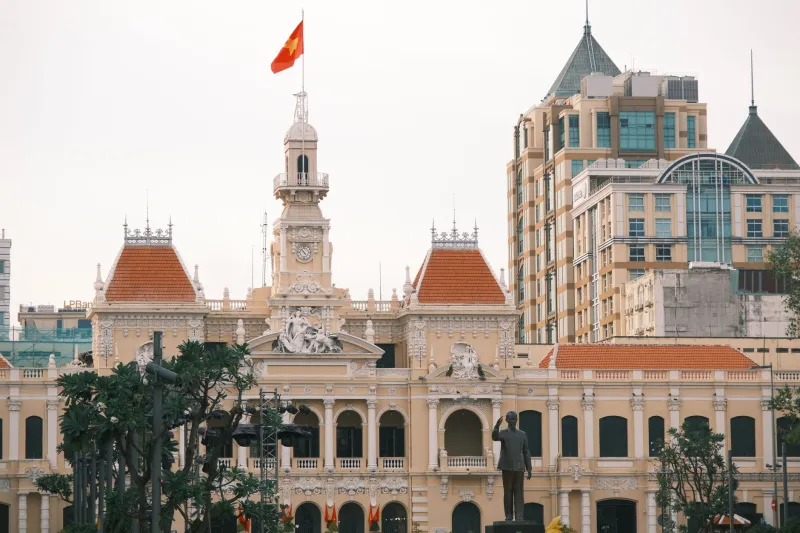
Walk through any major American city with a significant Southeast Asian community and you'll start noticing things. A roofline that curves just slightly upward at the corners. A doorway framed in carved woodwork that echoes a temple entrance. A community garden laid out in a pattern that, if you know what you're looking at, mirrors the cardinal geometry of a Theravada Buddhist monastery compound. These aren't accidents. They're statements.
A growing cohort of Southeast Asian American architects, urban planners, interior designers, and public space consultants are doing something quietly radical: they're embedding their cultural DNA into the physical fabric of American cities. And while the results can be stunning, the road to getting there is rarely smooth.
More Than Decoration
For a lot of people outside these communities, Southeast Asian design elements read as decorative — ornamental flourishes that make a restaurant feel more "authentic" or give a cultural center a recognizable look. But the designers doing this work will tell you fast that what they're reaching for goes much deeper than aesthetics.
Take the concept of sala spaces — open-air pavilions found across Thailand, Cambodia, Laos, and Myanmar that function as gathering places, rest stops, and informal community hubs. Several Southeast Asian American designers have been quietly advocating for versions of this spatial logic in community development projects in cities like Minneapolis, Houston, and Garden Grove. The idea isn't to copy-paste a Thai pavilion into a Minnesota park. It's to ask: what does a space that encourages sitting, lingering, and communal presence look like when it's built for a Hmong family in the Twin Cities winter?
That translation work — taking a spatial philosophy and adapting it to American materials, climate, and building codes — is where a lot of the real creative labor happens. And it's work that rarely gets credited in the architectural press.
The Resistance Is Real
Here's where it gets complicated. Southeast Asian American designers working in mainstream American development — not just community-focused nonprofits, but actual commercial and municipal projects — run into a particular kind of resistance that's hard to name but easy to feel.
It usually shows up in design review meetings, when a proposal that incorporates, say, a lotus motif in the facade tiling or a spirit house-adjacent welcome structure in the lobby gets flagged as "too specific" or "potentially alienating to other users." The feedback is almost always framed as practical. But the subtext tends to be: this doesn't look like architecture. This looks like a culture.
As if those two things were separate.
The double standard isn't subtle once you start looking for it. Greek columns on a courthouse? Classical. A pagoda roofline on a Vietnamese American cultural center? Ethnic. The hierarchy embedded in those judgments is something Southeast Asian American designers navigate constantly, and it shapes everything from which commissions they pursue to how boldly they pitch their cultural vision to clients who aren't from their communities.
Neighborhoods as Living Archives
Some of the most interesting work happening right now isn't in individual buildings — it's at the neighborhood scale. Revitalization efforts in communities like Westminster's Little Saigon in Orange County, Seattle's Rainier Valley, and the Cambodian corridor along Anaheim Street in Long Beach are increasingly being shaped by designers who see the streetscape itself as a form of cultural memory.
Street signage in Vietnamese and Khmer. Public art installations that reference migration and displacement. Storefront design guidelines that encourage traditional color palettes and material choices without forcing them. These are small interventions individually, but collectively they do something significant: they tell people who belong to these communities that the city sees them. Not as a demographic to market to, but as a community that shaped this place.
The challenge is sustainability. Gentrification has a way of absorbing cultural aesthetics while displacing the actual communities those aesthetics came from. A neighborhood can get the neon signs and the lotus motifs and the temple-adjacent park pavilion while the families who inspired all of it get priced out over the course of a decade. Designers working in this space are acutely aware of that tension, and the sharper ones are building community land trust advocacy and anti-displacement policy work into their practice alongside the design work.
Spiritual Space in Secular Buildings
One area where Southeast Asian American designers are doing some genuinely boundary-pushing work is in the integration of spiritual spatial logic into buildings that aren't explicitly religious. This is trickier than it sounds in the American context, where the separation of church and civic space is both a legal principle and a cultural norm.
But Southeast Asian traditions don't always draw that line the same way. The spirit house at the entrance to a business. The altar corner in a home that doubles as a living room. The threshold rituals that mark moving between spaces. These aren't incidental to the architecture — they're part of how the architecture functions for the people using it.
Some designers are finding ways to honor this without triggering legal or institutional friction. A community health clinic in a Hmong-heavy neighborhood in St. Paul, for example, was designed with a designated "reflection alcove" near the entrance — a small, sheltered space with natural light, a water feature, and a small shelf that can hold whatever a visitor needs it to hold. It's secular on paper. In practice, it functions exactly as intended: as a place to gather yourself before you walk in, to set something down, to acknowledge the weight of what you're carrying.
That kind of design intelligence — culturally specific but institutionally legible — is a skill set, and it's one that Southeast Asian American designers have developed out of necessity.
The Next Generation Is Less Patient
If the older generation of Southeast Asian American designers learned to work within constraints and translate their vision into terms that mainstream institutions could accept, the younger generation coming up now is operating with a different energy. They're less interested in softening the cultural specificity of their work to make it palatable. They want to see lotus columns and spirit gate archways and naga railings in American public space, full stop, and they're building the community of clients, advocates, and fellow designers who can make that happen without having to apologize for it.
That shift is visible in emerging firms, in design school thesis projects, and in the growing number of Southeast Asian American designers organizing collectively to push for more representation in public commissions and development review boards.
The skyline is changing. Slowly, unevenly, with a lot of friction along the way. But it's changing. And the people changing it are doing it with intention — carrying their grandmothers' sense of sacred space into cities that are still figuring out how to make room for it.