3 AM and Still Creating: The Night Shift Workers Turning Long Hours Into Loud Art
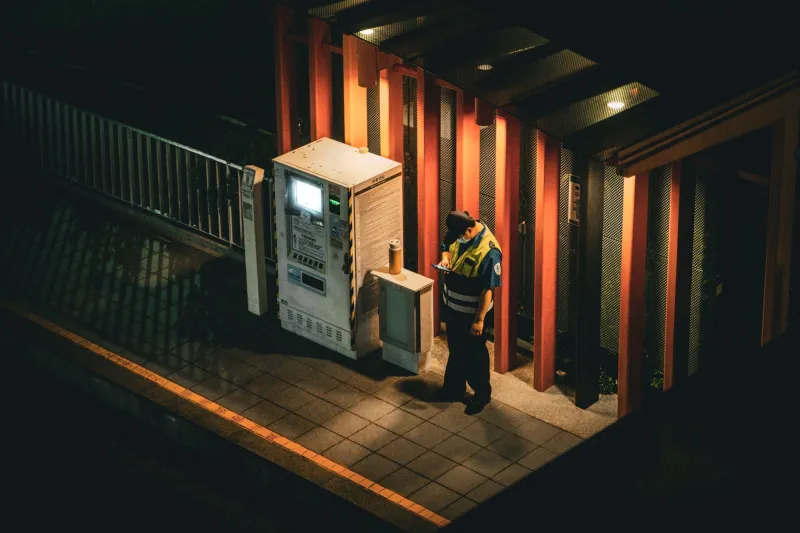
The fluorescent hum of a hospital corridor at 2 AM. The particular stillness of a parking structure at 4. The way a gas station bathroom looks under bad lighting when you're six hours into a twelve-hour shift. These aren't the settings you usually find in American creative origin stories. But for a growing number of Southeast Asian Americans working nights, they're exactly where the art starts.
Across the country, a loose, mostly unconnected network of nurses, security guards, overnight retail workers, hospital environmental services staff, and graveyard-shift convenience store owners are doing something that doesn't get talked about enough: they're making things. Writing. Recording. Drawing. Podcasting. Building audiences. Telling their own stories in their own voices, in the margins of schedules that most people would find crushing.
The Hours Nobody Else Wants
Night shift work has always been disproportionately Southeast Asian American. The reasons are layered — refugee resettlement histories, limited English proficiency in first-generation workers, the economics of taking whatever's available when you arrive somewhere new, and the way certain industries actively recruit from immigrant communities for overnight positions because the pay is worse and the turnover is high.
For a lot of families, the night shift wasn't a choice. It was survival. A Lao American father working overnight security so his kids could go to school in the morning. A Cambodian American mother cleaning hospital rooms from 11 PM to 7 AM, coming home just in time to make breakfast. These are not abstract demographics. These are specific people with specific lives, and for a long time, the stories of those lives stayed mostly inside their own communities.
What's shifted — and it's a real shift, not a trend piece exaggeration — is that some of those workers, or their children who grew up watching those workers, are now creating public-facing work that centers those experiences directly.
Writing in the Break Room
Mai, a Vietnamese American registered nurse in her mid-thirties working nights at a large hospital in the San Gabriel Valley, started keeping a journal during her breaks about four years ago. Not a diary exactly — more like field notes. Observations about patients, about the particular emotional texture of being the person present when someone dies at 3 AM, about what it feels like to be one of the only Southeast Asian faces on a floor that serves a majority Southeast Asian patient population but is administered almost entirely by people who don't speak any of the same languages.
Those notes became essays. The essays found their way to a small literary journal, then a slightly larger one. She has a collection manuscript in progress now. She writes almost exclusively on nights, in the break room, on her phone, between rounds. "The exhaustion does something to the filter," she says. "You stop trying to make it sound like something. You just write what it actually is."
That quality — the stripped-down directness that comes from writing when you're too tired to perform — shows up across a lot of the creative work coming out of this community. It has a texture that's hard to fake.
The Podcast Running on Overtime
In Houston, a Cambodian American security guard named Dara runs a podcast out of his car during the slow hours of his overnight shift at a commercial property complex. The show, which has built a modest but intensely loyal audience of a few thousand listeners, covers Cambodian American history, interviews with elders, and conversations with other second-generation folks navigating identity in the South.
He records on his phone, edits on a laptop at home before he sleeps, and publishes on a schedule that would make a media professional wince. It's not polished. The audio quality varies. Sometimes you can hear the ambient sounds of the parking structure in the background. His listeners, by and large, love that about it.
"People tell me it sounds real," he says. "Like I'm not trying to be NPR. I'm just talking." There's something in that — the way authenticity in media often gets confused with production value, and how creators working without resources sometimes end up with something more honest than what comes out of a professional studio.
Music Made in the Margins
The music coming out of this world is its own thing entirely. A Filipino American hospital environmental services worker in Chicago has been posting instrumentals to SoundCloud for three years — beats built from samples he records on his phone during shift: the rhythm of a mop bucket, the mechanical breathing of a ventilator through a closed door, the particular acoustic signature of an empty hospital corridor at 5 AM. His follower count is small. The music is genuinely strange and genuinely beautiful.
A Hmong American overnight stocker at a big-box retailer in the Twin Cities records rap verses in his car before his shift starts, freestyling over beats he downloads free. He's been doing it since high school, never released anything formally, but his cousin started posting clips to Instagram and the response surprised both of them. The verses are mostly about his family's refugee history, about working a job that doesn't see him, about what it means to be Hmong in Minnesota in 2025. They land because they're specific. The specificity is the whole point.
Exhaustion as Creative Condition
There's a version of this story that romanticizes the grind — the noble suffering of the working-class artist, creativity blooming in hardship, all that. That framing does a disservice to what's actually happening, and most of the people doing this work are the first to push back on it.
The night shift is hard. It wrecks your sleep, your health, your social life. The creativity that comes out of it isn't a silver lining — it's something these people are doing despite the conditions, not because of them. The art would probably be easier to make if the economic circumstances were different. Nobody is grateful for the exhaustion.
What they are is determined. And that determination — to document, to express, to be seen on their own terms — is something that the circumstances can't take away, even when they take a lot of other things.
Community in the Dark
Maybe the most underreported part of this story is how these creators find each other. Not through formal networks or industry events, but through the slow accumulation of follows and comments and DMs from people who recognize something in the work. A nurse in Houston finds the security guard's podcast. The stocker in Minneapolis gets a message from a warehouse worker in Sacramento who heard his cousin's Instagram clip. A loose, informal constellation of people who share a particular kind of American experience starts to form.
They're not a movement. They're not organized. But they're there, in the hours between midnight and morning, making things that matter — to themselves first, and then, quietly, to everyone paying attention.